Your Organic Playbook: The Dirty Dozen and Clean 15
Navigating the Organic Aisle: Your Essential Guide to Informed Food Choices
The journey into parenthood often brings with it a heightened awareness of health and nutrition. For our family, the arrival of Reece five years ago sparked a profound shift in how we approach the food we consume daily. A cornerstone of this new focus has been the increased emphasis on fresh fruits and vegetables, and where possible, prioritizing organic selections. This commitment isn’t just a fleeting trend; it’s a conscious effort to nourish our bodies with wholesome foods while thoughtfully considering our impact on personal health and the environment.
In today’s complex food landscape, making informed decisions can feel like a daunting task. With countless labels, health claims, and varying price points, how do consumers confidently choose what’s best for their families? Fortunately, resources exist to simplify this process, offering clarity and actionable advice. Our primary guide in this endeavor has been the invaluable work of the Environmental Working Group (EWG), a non-profit organization dedicated to protecting human health and the environment.
Understanding the EWG’s Shopper’s Guide to Pesticides in Produce
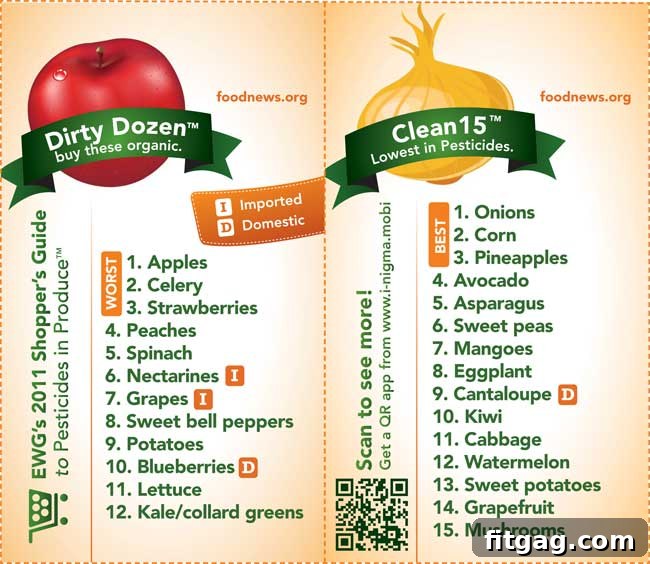
Each year, the EWG meticulously compiles and releases its widely recognized Shopper’s Guide to Pesticides in Produce. This essential guide serves as a beacon for consumers seeking to reduce their exposure to agricultural pesticides. By analyzing extensive data from thousands of produce samples tested by the USDA and FDA, the EWG identifies which fruits and vegetables carry the highest and lowest pesticide loads. The results are presented in two critically important lists: the Dirty Dozen and the Clean Fifteen.
The significance of the EWG’s methodology lies in its realism. They evaluate pesticide residue data on produce *as it’s typically consumed*—meaning after standard washing and, where applicable, peeling. This approach provides a practical understanding of actual consumer exposure, making the guide directly relevant to your grocery shopping decisions. For families like ours, who aim to make healthier choices within budget constraints, these lists offer a strategic framework for prioritizing organic purchases.
Discovering this comprehensive guide over a year ago was a turning point in my organic shopping habits. It demystified the produce aisle and empowered me to allocate my “organic dollars” more effectively. Instead of guessing, I now shop with confidence, knowing which items warrant the organic label most acutely. You can explore the full, detailed rankings of 53 fruits and vegetables by visiting the EWG’s official Food News website here.
Why Prioritize Organic for the Dirty Dozen?
The Dirty Dozen list highlights produce items that consistently test positive for multiple pesticide residues and often at higher concentrations than other fruits and vegetables. These items typically have thinner skins, are eaten whole, or are grown using methods that make them more susceptible to pesticide absorption. While regulatory bodies set “safe” limits for pesticide residues, many consumers opt for organic versions of these items to minimize their cumulative exposure. This is particularly relevant for children, whose developing bodies may be more vulnerable to chemical inputs. Choosing organic for these specific items can significantly reduce your family’s overall pesticide load without requiring a complete overhaul of your grocery budget.
The Clean Fifteen: Where Conventional Choices Shine
Conversely, the Clean Fifteen lists produce with the lowest amounts of pesticide residues. Many of these items have thick, inedible peels (like avocados or pineapples) that protect the edible flesh from chemical exposure. Others, such as onions or sweet corn, have natural protective layers or are grown in ways that naturally deter pests. For these fruits and vegetables, purchasing conventional (non-organic) options is generally considered a safe and budget-friendly choice. This allows shoppers to save money on items that pose less risk, freeing up funds to invest in organic versions of the Dirty Dozen.
Balancing Health and Budget: Practical Organic Shopping Strategies
While the ideal scenario might be to buy all organic produce, for most families, including my own, this simply isn’t financially sustainable. The good news is that an all-or-nothing approach isn’t necessary. The most critical takeaway, which cannot be overstated, is that the profound health benefits of consuming a diet rich in fruits and vegetables unequivocally outweigh any potential risks associated with pesticide exposure from conventionally grown produce. If buying organic is not an option, please do not stop eating fruits and vegetables! Continue to fill your plate with vibrant produce, regardless of its organic status.
For those with limited budgets, the Dirty Dozen and Clean Fifteen lists become indispensable tools. They provide a clear framework for smart spending, enabling you to invest your “organic dollars” where they will have the greatest impact. Here are some actionable strategies to make organic eating more affordable and accessible:
Create a Price Comparison Sheet: Take the time to visit your favorite grocery stores and local farmer’s markets. Document the prices of both organic and conventional versions of the fruits and vegetables your family consumes regularly. You might be surprised to find significant price variations between retailers.
Identify Smart Switches: Look for produce items where the organic price is only slightly higher than the conventional—ideally less than a 25% price difference. These are excellent candidates for making the switch without a substantial impact on your budget. For example, I’ve consistently found organic apples, lettuce, and many leafy greens to be very reasonably priced.
Leverage Sales and Promotions: Be vigilant for sales on organic produce. Some stores frequently offer discounts, making organic options comparable to, or even cheaper than, their conventional counterparts. I often find organic produce to be on par with conventional prices, and sometimes even lower when on sale!
Shop Seasonally and Locally: Buying produce when it’s in season often means lower prices and fresher quality, regardless of whether it’s organic or conventional. Local farmer’s markets are excellent places to find seasonal organic produce, often at competitive prices directly from the grower.
Consider Frozen Organic Produce: Don’t overlook the freezer aisle. Frozen organic fruits and vegetables are often more budget-friendly than their fresh counterparts and retain much of their nutritional value. They’re perfect for smoothies, soups, and stir-fries.
Understand the “Organic” Label: Look for the “USDA Organic” seal. This certification ensures that the product has met stringent federal standards concerning soil quality, pest and weed control, and the absence of synthetic fertilizers, pesticides, and GMOs. Knowing what the label signifies can help you make confident choices.
By combining these strategies with the EWG’s Dirty Dozen and Clean Fifteen lists, you can create a personalized, cost-effective approach to healthy eating that aligns with your family’s budget and values.
The Essential Lists for Your Shopping Cart
These lists are your practical companions in the grocery store. Keep them handy – print them out, save them on your phone, or simply familiarize yourself with the key items.
The Dirty Dozen: Prioritize Organic for These Items
Apples
Celery
Strawberries
Peaches
Spinach
Nectarines
Grapes (Imported)
Sweet Bell Peppers
Potatoes
Blueberries (Domestic)
Lettuce
Kale/Collard Greens
The Clean Fifteen: Safer Conventional Choices
(These items typically have the lowest pesticide residues and are generally safe to buy conventionally.)
Onions
Sweet Corn
Pineapples
Avocado
Asparagus
Sweet Peas
Mangoes
Eggplant
Cantaloupe (domestic)
Kiwi
Cabbage
Watermelon
Sweet Potatoes
Grapefruit
Mushrooms
Beyond Labels: The Importance of Washing All Produce
Regardless of whether you choose organic or conventional produce, proper washing is a crucial step in preparing your food. Washing helps to remove dirt, surface bacteria, and, for conventional produce, some pesticide residues.
Rinse Thoroughly: Always rinse fruits and vegetables under cool running tap water. Gently rub items with firm skin (like apples or potatoes) with your hands or a produce brush.
No Soap Needed: Avoid using soap, detergents, or commercial produce washes. These products can leave residues on your food and are not proven to be more effective than plain water.
Dry Properly: After washing, dry produce with a clean cloth or paper towel to help remove any remaining bacteria and moisture.
Wash Before Peeling: Even if you plan to peel the produce, wash it first to prevent transferring dirt or pesticides from the peel to the edible portion.
These simple steps ensure that all your produce, whether from the Dirty Dozen or Clean Fifteen, is as clean and safe as possible before it reaches your plate.
Empowering Your Healthy Lifestyle
Making informed decisions about the food we eat is one of the most proactive steps we can take for our family’s health and well-being. The EWG’s Shopper’s Guide is an incredibly powerful tool, transforming the often-confusing world of produce choices into a clear, actionable roadmap. It empowers us to make strategic decisions that align with both our health aspirations and our financial realities.
I encourage you to embrace this information and integrate it into your regular shopping routine. Remember to print out the official EWG reference guide or download their convenient app to your Android or iPhone device. Having these lists readily accessible at the grocery store can make a significant difference in your daily choices.
What are your strategies for buying organic produce for your family? Have you found these lists helpful in navigating your grocery store visits? Share your experiences, tips, and thoughts in the comments below. Let’s build a community of informed consumers, learning and growing together in our pursuit of a healthier lifestyle!
This article is proudly linking up with fellow health and home enthusiasts. Find us here, at Home Stories A2Z, and My Repurposed Life.
The post Your Organic Playbook: The Dirty Dozen and Clean 15 first appeared on Fitgag.