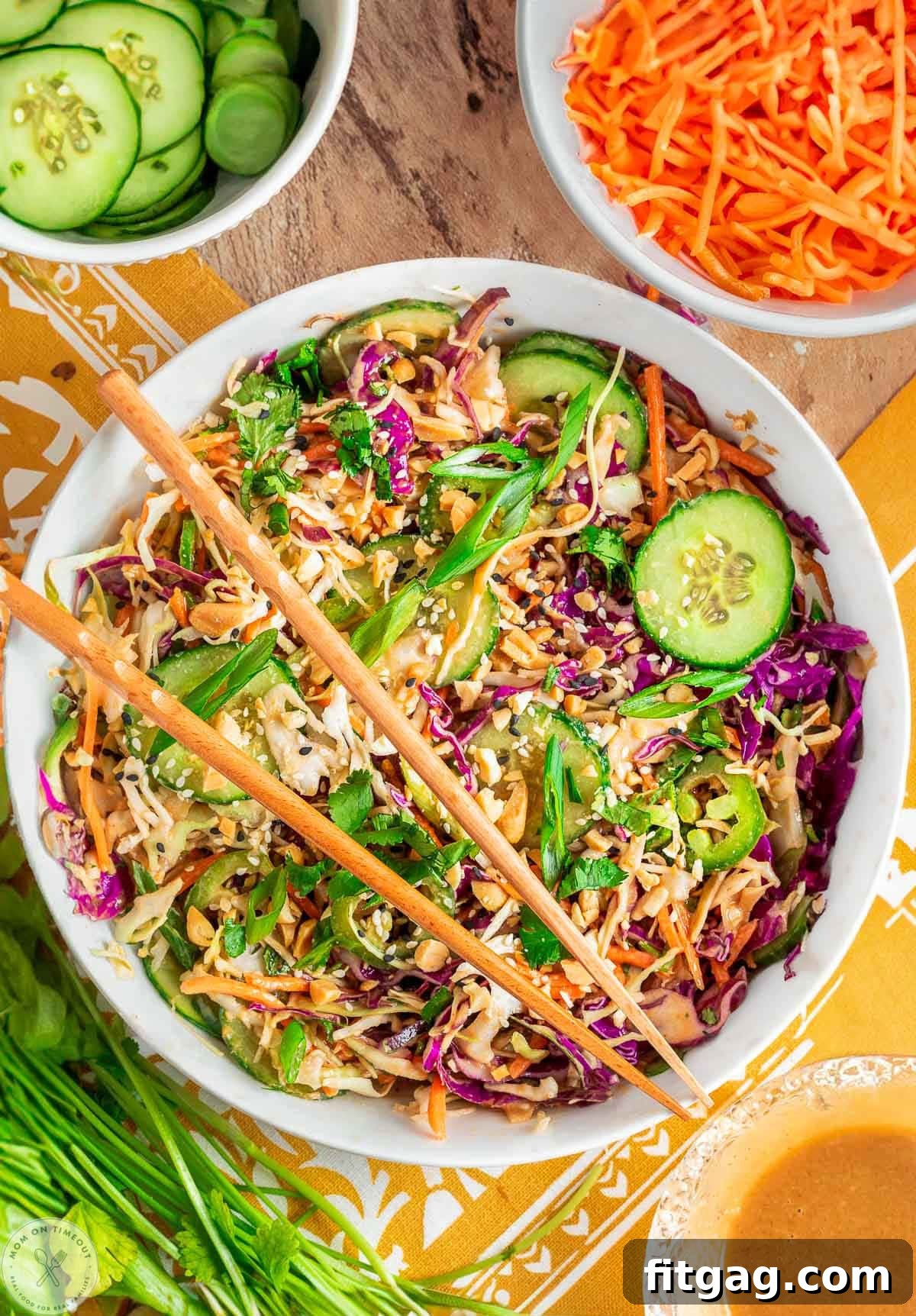
Thai Peanut Salad with Crunchy Veggies and Lime Dressing
This Thai Salad is a vibrant, crunchy dish loaded with fresh vegetables and finished with a creamy Thai peanut dressing. It’s colorful, satisfying, and easy to prepare—perfect for lunches, quick dinners, potlucks, BBQs, or meal prep. Each bite balances savory, sweet, and tangy flavors with a delightful crunch.
For other easy salads, consider recipes like Chickpea Salad, Peach Burrata Salad, or a simple Berry Salad.
Thai Salad Recipe
This Thai Salad combines crisp cabbage, julienned carrots, cucumber, jalapeño, green onions, and fresh cilantro for a lively mix of textures and flavors. Toasted sesame seeds and chopped roasted peanuts add a satisfying crunch. The creamy homemade Thai peanut dressing evenly coats the vegetables, giving the salad a rich, sweet-savory finish while keeping it light and refreshing.
Serve it as a side, a light main with added protein (grilled chicken, shrimp, or tofu), or pack it for lunches. The ingredients hold up well, so it’s an excellent option for make-ahead meals.
This salad is very versatile. You can prep the vegetables in advance and keep the dressing separate until serving. Swap in favorite vegetables or toppings to customize the salad and make it your own.
Thai Peanut Dressing
The Thai peanut dressing is creamy, tangy, and slightly sweet—an ideal companion to the crunchy vegetables. It’s made from peanut butter, rice vinegar, soy sauce, fish sauce, honey (or maple syrup), sesame oil, garlic, ginger, and a touch of sriracha for heat. Adjust ingredients to taste for a milder or spicier dressing.
Why You’ll Love This Salad
This Thai Salad delivers bold flavor, varied textures, and easy customization. It’s light enough for a refreshing meal but rich and satisfying thanks to the peanut dressing. Key benefits include:
Bold flavor: A creamy peanut dressing with sweet, savory, and tangy notes.
Great texture: Crunchy cabbage and vegetables with optional toppings like peanuts or wonton strips.
Customizable: Add proteins, swap vegetables, or adjust the spice level.
Meal-prep friendly: Vegetables hold up in the fridge; keep the dressing separate until serving.
Light and filling: Fresh produce plus a rich dressing makes a satisfying dish without heaviness.
Ingredients and Substitutions
Below are the main components for the salad and the dressing. Use substitutions to suit dietary needs or pantry availability.
For the Salad
Cabbage: The crunchy base—green, purple, or a mix.
Carrots: Julienned for color, sweetness, and crunch.
Cucumber: Thinly sliced for a cool, refreshing bite.
Green Onions: Add a mild, bright onion flavor.
Cilantro: Fresh herb flavor that pairs well with the dressing.
Peanuts: Optional but recommended for extra crunch and nuttiness.
For the Peanut Butter Dressing
Peanut Butter: Use creamy for a smooth dressing; natural peanut butter can work if well-stirred.
Soy Sauce and Fish Sauce: Provide umami and depth; use low-sodium versions or tamari for gluten-free options.
Rice Vinegar: Adds brightness and acidity.
Honey or Maple Syrup: Balances flavors with gentle sweetness.
Toasted Sesame Oil: Adds a nutty aroma and flavor.
Garlic and Ginger: Fresh or paste adds warmth and complexity.
Sriracha: Optional for heat—adjust to taste.
Storage Information
This salad stores well when assembled thoughtfully. For best texture, keep the dressing separate and combine just before serving.
Refrigerator: Keep the undressed salad in an airtight container for up to 4 days.
Dressing: Store the peanut dressing in the fridge for up to 1 week.
Meal Prep Tip: Portion salads into individual containers and keep dressing in small jars to add when ready to eat.
Variations To Try
Add grilled chicken, shrimp, tofu, or steak to make it a heartier main course.
Increase heat with extra sriracha, chili garlic sauce, or red pepper flakes.
Substitute or add vegetables like snap peas, bell peppers, shredded Brussels sprouts, broccoli slaw, or napa cabbage.
Toss in rice noodles for a more filling salad.
Use tamari instead of soy sauce for a gluten-free version.
Frequently Asked Questions
Can I make this salad ahead of time?
Yes. Prepare and store the chopped vegetables in the refrigerator and keep the dressing separate. Toss them together just before serving to preserve crunch.
What kind of peanut butter works best?
Creamy peanut butter yields the smoothest dressing. If you use natural peanut butter, stir it well before measuring so the oil is incorporated.
Can I make this vegetarian?
Yes. Replace honey with maple syrup and omit fish sauce or use a vegetarian alternative. Add tofu or edamame for protein.
Is the Thai peanut dressing spicy?
Not necessarily—this dressing is mild as written. Add sriracha or chili sauce for more heat.
What can I serve with this salad?
This salad pairs nicely with grilled chicken, salmon, spring rolls, or as a refreshing side for burgers and sandwiches.
Trish’s Tips
Keep the salad and dressing separate if you want leftovers that stay crisp.
Make the dressing ahead of time—the flavors meld and improve after a couple of hours.
If the dressing is too thick, whisk in a tablespoon or two of warm water to thin it to your desired consistency.
If the refrigerated dressing thickens, warm it briefly (about 15–20 seconds) and shake or whisk before using.
If using low-sodium soy sauce, taste the dressing and add salt if needed.
Use a mandoline or sharp knife for even slicing of vegetables for the best texture and presentation.
More Tasty Salads To Try
Broccoli Salad
Pea Salad
Fruit Salad
Cucumber Salad
Coleslaw
Print
Pin
Thai Salad with Peanut Dressing
Ingredients
Thai Peanut Dressing
½ cup creamy peanut butter
¼ cup rice wine vinegar
2 tablespoons soy sauce
2 tablespoons honey
1 tablespoon fish sauce
1 tablespoon sriracha
1 teaspoon toasted sesame oil
1 teaspoon ginger paste
1 teaspoon garlic paste
Salad Ingredients
6 cups shredded cabbage
1 cup carrots
1 English cucumber
2 green onions
⅓ cup fresh cilantro
1 jalapeno pepper
Garnish
1 tablespoon sesame seeds
¼ cup chopped roasted peanuts
Instructions
Thai Peanut Dressing
Notes
Store the undressed salad in an airtight container for up to 4 days. Keep the peanut dressing separate in the refrigerator for up to 1 week. Portion the salad and dressings into containers for easy grab-and-go meals.
See the full recipe details above for tips, suggested variations, and answers to common questions.
Nutrition
The post Thai Peanut Salad with Crunchy Veggies and Lime Dressing first appeared on Fitgag.