Your Reading Habit May Help Protect Your Brain (Here’s What the Research Says)
When was the last time you read a book just because you wanted to?
I’m not talking about emails, recipes on your phone, or the 47th Facebook post about someone’s kitchen remodel. I mean a real book that pulled you in so far you looked up and realized the tea went cold.
If it’s been a while, I’ve got some good news for you. A growing pile of research links reading for pleasure with sharper thinking, less stress, and a lower risk of dementia as we age. And the women who seem to benefit most are the ones who keep their minds busy across a lifetime, which means it’s never a bad time to pick the habit back up.
As a trainer, I spend most of my time talking about muscles. But your brain needs a workout plan too, and the best part? This one comes with a cozy blanket. Let’s look at what the science says, how exercise fits into the picture, and the books readers are loving right now.
What New Research Found About Reading and Your Brain
In September 2026, researchers at the University of Cambridge published a major review in Psychological Medicine that pulled together decades of studies on reading and the brain. The quick summary is that reading for enjoyment is linked to better thinking skills, better mental well-being, less stress, less loneliness, and a lower risk of dementia.
And it doesn’t have to be War and Peace. Novels, magazines, memoirs, mysteries, even graphic novels all count. The key word is pleasure. You don’t have to be reading to become smarter or more informed for it to matter.
Here’s what caught my attention as a woman in my 60s: for older adults, the strongest evidence comes from studies that followed real people for years and years. That’s where things get interesting.
The Studies That Followed Readers for Years
Reading once a week, tracked for 14 years: A 14-year study in Taiwan followed 1,962 adults ages 64 and up. The ones who read at least once a week were about half as likely to show a decline in memory and thinking skills at the 6-, 10-, and 14-year check-ins compared with people who read less often.
Read this twice: the benefit showed up at every education level. You don’t need a fancy degree for reading to count. You just need to open the book.
More enrichment, later Alzheimer’s: Then in 2026, researchers at Rush University in Chicago published a study in Neurology that followed 1,939 older adults (75% of them women!) with an average starting age of almost 80. They tracked them for an average of 7.6 years.
The researchers looked at “lifetime cognitive enrichment,” which includes things like reading, writing, and learning from childhood all the way through later life. Here’s what they found:
People with more lifetime enrichment had a 38% lower risk of developing Alzheimer’s dementia for each step up on the enrichment scale.
The most enriched group developed Alzheimer’s about 5 years later, on average, than the least enriched group.
Their thinking skills also declined more slowly, even when brain autopsies showed the same kinds of changes as everyone else.
That last point is the one I keep thinking about. Their brains weren’t necessarily free of disease. They were just better at working around it.
Five more years of clear thinking is a big deal. That’s five more years of birthdays, road trips, and grandkids who know exactly who you are.
Why Reading Might Help: Your Brain’s Savings Account
Scientists think reading helps build something called cognitive reserve. I like to think of it as a savings account for your brain. Every time you follow a plot, picture a new place, or learn something new, you’re making a deposit. Later in life, when the brain starts to change, you’ve got extra capacity to draw from so you can keep working well.
It’s the same idea I preach about muscle. The strength you build in your 40s and 50s is what carries you through your 70s and 80s. Your brain works the same way.
The Honest Fine Print
I’d never oversell this to you, so here’s the real deal:
These studies show a strong link, but they can’t prove that reading itself protects the brain. Avid readers may also have more education, better health, or other habits working in their favor.
Asking an 80-year-old to remember how much she read as a kid isn’t exactly precise science.
Researchers still don’t know for sure whether picking up reading later in life brings the same benefit as a lifelong habit.
Moral of the story? There’s no downside here. Reading is cheap, relaxing, and something you can start tonight. And if it means swapping out some mindless scrolling or a third episode of a show you’re half watching, even better. Too much passive screen time isn’t doing your brain any favors.
If you’ve been a reader most of your life, you’ve already got a strong foundation. Now’s the time to get back to it.
Don’t Forget the Other Brain Booster: Exercise
You knew I was going to get here, ladies. If reading is a workout for your mind, exercise is a workout for your mind and your body, and the research on movement and Alzheimer’s is some of the most encouraging out there.
Here’s what the studies show:
Active people have a lower Alzheimer’s risk. A 2025 analysis in the Journal of Neurology combined 29 studies with more than 1.4 million people. People who did the most vigorous activity had a 26% lower risk of Alzheimer’s, and the benefit was even stronger in people 75 and older.
Every bit of movement adds up. That same analysis found Alzheimer’s risk dropped about 15% for every 10 MET-hours of activity per week. In real life, that’s roughly 2.5 hours of brisk walking.
Your steps count. A UK Biobank study of 78,430 adults found that people who walked about 9,800 steps a day had roughly half the risk of dementia. Even around 3,800 steps a day was linked to a 25% lower risk.
You don’t need 10,000 steps to see benefits. A 2025 Harvard-affiliated study in Nature Medicine found that older adults who walked 5,000 to 7,500 steps a day had slower buildup of tau (one of the proteins linked to Alzheimer’s) and slower cognitive decline. The benefit leveled off around that range, which is a very doable goal.
Inactivity is a risk factor you can change. The 2024 Lancet Commission on dementia named physical inactivity as one of 14 modifiable risk factors and estimated that nearly half of dementia cases could be prevented or delayed by addressing them.
Same fine print as before: most of this research shows links, not proof. But there’s a reason I’m such a broken record about moving every day. Cardio is to live longer, strength training is to live stronger, and mobility training is to live pain-free. Now we can add “protect your brain” to that list.
Want my favorite combo? Take a walk, then come home and read. Or pop in an audiobook on your walk or while you’re on the walking pad, and you’ve stacked two brain-healthy habits into one.
How to Make Reading a Daily Habit (Even If You Haven’t Finished a Book in Years)
Here’s something fun: a Yale study of 3,635 adults over 50 found that book readers had a 20% lower risk of dying over the next 12 years than non-readers, even after accounting for education, wealth, and health. The researchers titled their paper “A chapter a day,” and I think that’s a pretty great goal.
You don’t need hours. Start where you are. Here’s how to make it stick:
Pick a time and place. Habits love a routine. Maybe it’s 15 minutes with your morning coffee, part of your lunch break, or in bed before lights out.
Make bedtime your reading time. Swapping your phone for a book at night is one of my favorite tips because it helps your brain wind down for sleep. And you know how I feel about sleep.
Set a tiny goal. Ten minutes, 10 pages, or one chapter. Some people like counting pages up instead of minutes down, because it feels like progress.
Keep books where you’ll see them. Nightstand, purse, car, the side table next to your favorite chair. Out of sight really is out of mind.
Give yourself permission to quit a book. If it’s not grabbing you after 50 pages, move on! Reading should relieve stress, not create it.
Read with someone. Join a book club, start a buddy read with a girlfriend, or read with your grandkids. Shared reading is linked to less loneliness, and that matters for brain health too.
Mix your formats. Physical books, e-readers, and audiobooks all count. Audiobooks are perfect for walks, folding laundry, or long drives.
Be patient with yourself. A 2024 review of habit research found new healthy habits often start to feel automatic after about two months, but it can take a lot longer for some people. Missed a night? Just pick it back up tomorrow.
Make it Cozy
This is the fun part. Grab your softest blanket, a mug of tea, and a good reading lamp. If you love to underline, keep a pencil and some colorful sticky tabs nearby to mark lines you want to remember.
A simple reading journal or a Goodreads.com list is a great way to track what you’ve read and what you thought of it. It’s amazing how motivating it is to watch that list grow!
The Most Popular Books Right Now for Your Nightstand
Need something to start tonight? These are some of the books flying off Amazon’s best-seller charts this fall. There’s a little bit of everything here, so pick what sounds fun and don’t overthink it.
Page-Turning Fiction
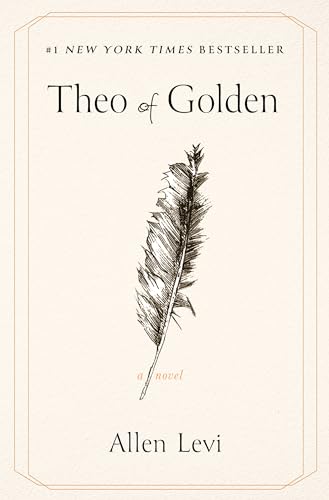
Theo of Golden by Allen Levi: A gentle, feel-good novel with more than 200,000 Amazon ratings. This is the one people keep recommending to their friends.
Theo of Golden: A Novel
$12.99
The Calamity Club by Kathryn Stockett: The long-awaited new novel from the author of The Help, and one of the most talked-about books of the year.
The Calamity Club: A Novel
$24.01
The French Illusion by John Grisham: Grisham’s newest, and a top seller in both fiction and mysteries right now.
The French Illusion: A Novel
$23.95
Project Hail Mary by Andy Weir: If you think sci-fi isn’t for you, this funny, big-hearted story might change your mind. Read it before (or after) the movie.
Project Hail Mary: A Novel
$13.88
Mysteries and Thrillers
Miss Wolcott’s Ghost by Louise Penny: The 21st Chief Inspector Gamache novel. If you haven’t started this series yet, you’ve got a cozy winter ahead of you.
Miss Wolcott’s Ghost: A Novel
$19.00
The Hollow by Michael Connelly: The newest Harry Bosch novel, perfect for fans of the Bosch TV series.
The Hollow: A Supernatural Mystery
$9.99
Mad Mabel by Sally Hepworth: A twisty, bingeable read from an author who’s great at domestic suspense.
Mad Mabel: A Novel
$20.28
The Witch by Freida McFadden: McFadden’s thrillers are the definition of “just one more chapter.” Don’t start this one at 10 p.m. on a work night!
The Witch Book By Freida McFadden
$24.99
Memoirs and Real-Life Stories
Strangers: A Memoir of Marriage by Belle Burden: A best-selling memoir that’s sparked a lot of book club conversations.
Strangers: A Memoir of Marriage
$16.27
Swan Song: Diana, My Sister by Charles Spencer: Princess Diana’s brother shares his own story of his sister.
Swan Song: Diana, my sister
$23.00
Man’s Search for Meaning by Viktor E. Frankl: A classic that’s still on the best-seller list decades later for good reason. Short, powerful, and worth rereading at every stage of life.
Man’s Search for Meaning
$12.01
Something extra for your brain
Murdle: Volume 1 by G.T. Karber: A book of murder-mystery logic puzzles. It’s like a crossword and a whodunit had a baby, and it’s a fun way to give your brain an extra workout.
Murdle: Volume 1
$12.48
Simply Ina by Ina Garten: A new Barefoot Contessa cookbook. Yes, cookbooks count as pleasure reading!
One From My Own Shelf
The New Menopause by Dr. Mary Claire Haver: If you’re in perimenopause or post-menopause and want real answers, this is the book I recommend to women again and again.
The New Menopause by Dr. Mary Claire Haver
$9.01
Want even more ideas? We put together a big Amazon idea list packed with book picks for every mood, from beach reads to brain-boosting nonfiction. Bookmark it for your next trip to the library or your next long weekend.
Should You Get a Kindle? (And Is Kindle Unlimited Worth It?)
If you’ve ever squinted at tiny print in dim light, or lugged three hardcovers on vacation, an e-reader might be your new best friend.
Here’s why so many midlife women I know have made the switch:
Adjustable text size. Make the font as big as you want. No readers required (hello, midlife eyes).
Easy on the eyes at night. Kindle screens aren’t backlit like your phone. The newer models have a warm light setting that’s gentle for bedtime reading.
Light and easy to hold. Reading in bed is so much more comfortable when you’re not holding a 500-page hardcover over your face.
Hundreds of books in your purse. Perfect for travel, waiting rooms, and kids’ (or grandkids’) practices.
No notifications. Unlike reading on your phone or tablet, there’s no text or email popping up to pull you away.
Amazon Kindle Paperwhite 16GB
$199.99
Tip: Kindles go on sale often, especially around Black Friday and Prime Day, so keep an eye out.
What is Kindle Unlimited (Kindle+)?
Kindle Unlimited (now Kindle+) is Amazon’s reading subscription. For $11.99 a month (at the time of writing), you get access to millions of e-books, plus audiobooks, magazines, and comics, with no extra cost per title. You don’t even need a Kindle to use it. The free Kindle app works on your phone or tablet.
Is it worth it? Here’s a simple way to decide. If you read more than one e-book a month, it can easily pay for itself. Just know that not every best seller is included, so check the books you want before you sign up. Amazon often offers a free trial, and some Kindles come bundled with a few free months, so try it out and see if it fits your reading style.
PS. Don’t forget your local library! Many libraries lend e-books and audiobooks for free through apps like Libby, and many of them work right on your Kindle.
Amazon Kindle Unlimited (Kindle+)
Your Brain Plan Starts Tonight
Here’s my challenge for you this week. Take a walk after dinner, then turn off the TV, leave your phone in another room, and grab that book on your nightstand with the bookmark stuck on page 42. You know the one. Pick up right where you left off.
You don’t need a perfect plan or a 50-book goal. Ten minutes tonight is a great start, and your brain will be glad you showed up.
What are you reading right now? Tell me in the comments. I’m always looking for my next great book!