Leg&airy Harnesses 3D Printing and AI From Head to Toe
People with reduced mobility face numerous daily challenges and often endure a long, difficult journey of medical appointments, setbacks, hope and disappointment. Leg&airy – Orthopedic Wonders, based in Baar, Switzerland, aims to support these patients, especially children, by helping them regain greater mobility. With individually tailored orthoses, every patient receives personalized care. Leg&airy follows a compassionate therapeutic approach and provides lifelong follow-up through a modern service model, intelligent technology and bespoke design. Central to their approach are 3D printing and artificial intelligence, which they use to strengthen clients’ resilience so they can become true masters — even “legendary” — of their mobility. We spoke with CEO Faizan Mohammad to learn more.
3DN: Could you briefly introduce yourself and tell us how Leg&airy came to be?
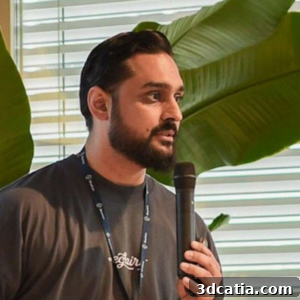
Faiza Mohammad, CEO of Leg&airy
My name is Faizan Mohammad, and I am CEO and co-founder of Leg&airy. Before launching Leg&airy, I worked as an IT specialist and business consultant across healthcare, pharmaceutical and finance sectors. Building Leg&airy was more than a business venture for me — it was personal. In 2018, my son was diagnosed with a rare neuromuscular condition that severely limited his walking and required orthopedic devices. Through that experience I witnessed how lengthy and stressful the fitting process for orthoses can be. I realized that adaptation and orthosis manufacturing had seen relatively little technical innovation over the decades, and I was determined to change that to improve the experience for patients and their families.
Since our first experiments in 2018 — which even began with orthoses for dogs — we have expanded our product range and now offer a complete line of orthopedic devices from head to toe. Each item is custom-fitted to the individual using 3D scanners, producing pieces that are lightweight, breathable and designed for maximum comfort. Our products also stand out for their modern, personalized aesthetic, setting them apart from conventional alternatives.
3DN: How and why did you adopt 3D printing? What value does this technology bring to Leg&airy?
It started at an exhibition a few years ago, when I visited a booth showcasing 3D printing. I was struck by the precision and the possibilities of the technology. The great advantage of 3D printing is that it enables true customization for each patient — no two feet, hands or spines are the same. Traditional customization was often done manually and could be imprecise or dependent on individual technicians’ skills. With 3D printing, we can change that. By combining advanced scanning and 3D printing technologies with our proprietary Leg&airy Design fitting process, we can produce products that match the patient’s body precisely. No other manufacturing method offers this level of fit and comfort, and we have effectively set a new standard for wearable comfort.
Combining 3D scanning, 3D printing and the Leg&airy Design fitting process enables bespoke orthosis manufacturing
3DN: What materials and 3D printing technologies do you use?
To ensure outstanding fit and precision, we use SLS printing alongside FDM printing with materials like TPU and PA12. This combination achieves extremely fine detail — print precision down to 0.3 mm with minimum wall thicknesses of just 1 mm. Our preferred material is PA12, a carbon-reinforced polyamide. PA12 is exceptionally lightweight, tough against fracture, and demonstrates excellent skin compatibility. Sustainability is also a priority: our production process saves approximately 96% of the material used compared to traditional manufacturing methods, reducing waste while delivering high-performance orthoses.
3DN: How are you using artificial intelligence in manufacturing?
Each orthosis we create is matched to the patient’s digital twin during the Leg&airy design process. In collaboration with academic partners, we are developing a machine learning algorithm to enable fully automated product adaptation during fitting. This is challenging because every person is different — children versus adults, small versus tall, and so on. AI-driven manufacturing will help us reduce the time from initial consultation to delivery, improve scalability, and ultimately make it possible to serve many more patients with consistently accurate, personalized orthoses.
3DN: What have been Leg&airy’s most exciting projects so far, and what are your goals?
Our most exciting milestones were definitely the first prototypes — what I like to call “learning opportunities.” We faced many challenges, from material selection to structural design. Each mistake taught us something and brought us closer to the ideal solution. Looking back, I’m grateful for those “failed attempts” because they shaped who we are today: Legendary. Right now we’re working on many new projects, but our immediate focus is expanding distribution and reaching new users and clients. That means collaborating closely with patients and clinicians to deliver the best possible therapy. We continually improve our products based on their feedback.
By collecting user data, Leg&airy aims to continuously improve its products and revolutionize orthopedics
Our vision is to transform the global orthopedic market by redefining how orthoses are manufactured, fitted and delivered. The patient is at the center of everything we do so we can create the best possible experience and ensure therapeutic success. A primary goal is to make orthoses and prostheses something children want to wear — devices that support their daily lives and allow them to live as fully as possible.
3DN: Where do you see 3D printing in medicine over the next several years?
I see enormous potential for 3D printing in the medical sector. Every person’s body is unique, and off-the-shelf products often cannot address that diversity — a reality increasingly important in the digital age. Everyone should have access to optimal treatment regardless of whether their body fits conventional standards. 3D manufacturing makes that possible. A wide range of 3D-printable materials suitable for use on and in the human body already exists, and biocompatible materials and precise fabrication techniques have advanced rapidly in recent years. Given these developments, I believe 3D printing will play an ever-larger role in medicine over the next decade and will find many valuable applications.
3DN: Any final words for our readers?
We want to express our sincere thanks to the engaged readers of 3Dnatives. Your interest and contributions to the development of 3D printing are invaluable. At Leg&airy we are proud to be part of this 3D printing community and to demonstrate the technology’s potential through our products. To learn more about Leg&airy, click HERE.
Standard products cannot meet the needs of modern orthopedics. The Leg&airy product family can be individually adapted to every body.
What do you think about Leg&airy’s use of additive manufacturing? Feel free to share your thoughts in the article comments. Interested in medical 3D printing news? Click HERE. You can also follow us on Facebook or LinkedIn.
*Photo credits: Leg&airy
The post Leg&airy Harnesses 3D Printing and AI From Head to Toe first appeared on 3dcatia.