Feetneeds: 3D Printed Custom Orthotic Insoles
Our legs and feet support us throughout life, enabling movement in many forms—walking, running, jumping, dancing. We often only notice how crucial they are when problems arise. Injuries, foot deformities (such as high arches or flat feet), disease-related impairments or prolonged standing can all cause pain and limit mobility. Special orthopedic insoles can relieve pain and restore function, but crafting custom insoles is traditionally labor-intensive and time-consuming. 3D printing presents an attractive alternative. Austrian company Plasmics uses additive manufacturing to elevate insole production with its Feetneeds platform, offering a digital, individualized, and efficient solution for custom orthopedic insoles.
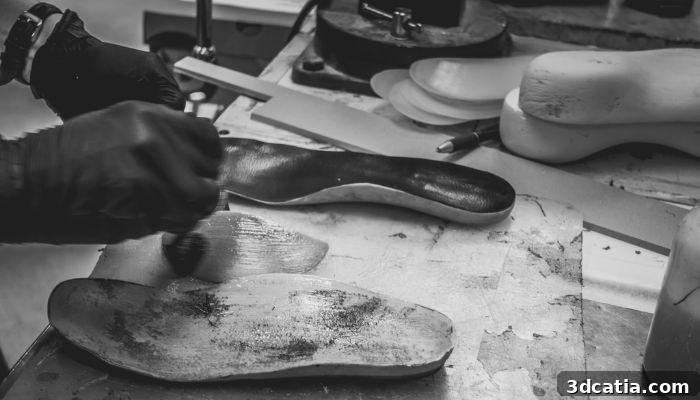
Conventional insole production requires many manual steps performed by trained specialists. That extends production time and lengthens the patient’s painful wait. Manual processes are also difficult to reproduce with precision and do not scale well for larger volumes. Furthermore, subtractive manufacturing creates significant waste and sanding dust. Additive manufacturing, by contrast, enables fast production with precise, repeatable results. This is the promise behind Plasmics’ Feetneeds platform: combining expert customization with automated additive production to deliver a modern, sustainable option for orthopedic insole manufacturing.
Traditional insole production involves many steps, costs, long lead times and material waste—3D printing significantly reduces these constraints
Feetneeds is a fully automated 3D printing solution specifically designed to produce personalized orthopedic insoles. The platform aims to deliver fast, accurate and cost-effective production while removing many manual steps from traditional workflows. This frees orthotists, prosthetists and podiatrists to spend more time applying their clinical expertise to patient care. With Feetneeds, practitioners submit their insole design and Plasmics manages the production. The platform accepts a range of input methods and automates the rest.
Feetneeds workflow — from foot scan to finished insole
Each custom insole begins with a measurement or scan of the patient’s foot. Feetneeds accepts 2D scans, 3D scans, foam models and blue imprint casts. The next stage is designing the individual insole, which can be completed using any common orthopedic CAD/CAM platform. The design is exported as an STL file and uploaded to the Feetneeds platform or sent directly to the printer through a data interface integrated with the CAD software. Printing can then begin automatically, with scheduling options that allow prioritization and timing adjustments as needed.
This automated workflow supports flexible business models. Frequent users can invest in their own platform, while others can use an on-demand printing service. From STL upload to finished insole the process is fully automated: the system handles slicing, queue management and intelligent job prioritization. Print time for a single insole is under 90 minutes. Continuous printing enables multiple insoles to be produced back-to-back without human intervention for extended periods. A heated filament storage chamber helps ensure consistent, high-quality prints. The material of choice is recyclable expanded TPU, printed with a honeycomb-like internal lattice that allows variation in local hardness across the insole (Shore A0 30 to A0 90). This tunable structure delivers the comfort and biomechanical properties required by orthopedic specialists.
How Plasmics applies 3D printing to finished medical products
Feetneeds addresses rising demand for personalized orthopedic solutions by providing healthcare professionals with a tool that adapts to changing regulatory and reimbursement frameworks. Scalability is a core goal: the platform is designed to enable sustainable, scalable production both in small clinics and in larger medical facilities.
Environmental considerations were central to Feetneeds’ development. Additive technologies produce far less waste than subtractive methods, lowering material costs and eliminating sanding dust and excessive noise, which creates a healthier workspace. The recyclable TPU material has been optimized to offer a balance of comfort and long-term durability.
By combining 3D printing with deep domain expertise, Feetneeds delivers a user-friendly medical product that demonstrates the feasibility and scalability of end-use parts in healthcare. The platform highlights the ecological and economic advantages of additive manufacturing versus traditional subtractive techniques. Plasmics showcased Feetneeds at the ORTHOPÄDIE SCHUH TECHNIK trade fair in Cologne on 24–25 October 2025. For inquiries about Feetneeds, contact Plasmics directly or visit the official Feetneeds website.
3D-printed insoles are ready in about 1 hour 30 minutes
What do you think of the Feetneeds platform developed by Plasmics? Share your thoughts in the comments section of the original article. If you follow developments in medical and dental 3D printing, look for related coverage on specialist sites and industry publications. *Photo credits: Plasmics
The post Feetneeds: 3D Printed Custom Orthotic Insoles first appeared on 3dcatia.