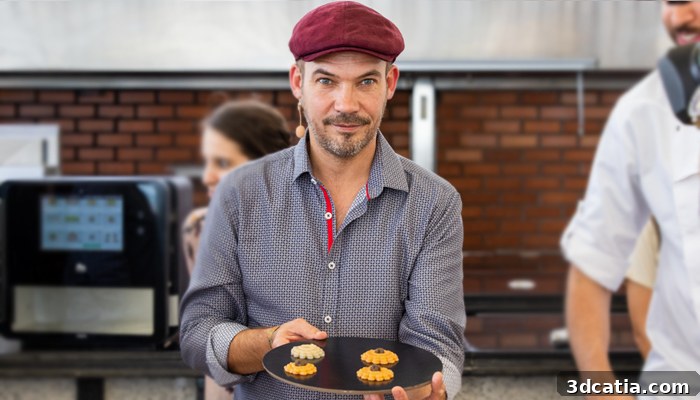
Moodbytes Drives 3D Printing Adoption in Restaurants
3D food printing is an emerging technology that enables chefs and restaurants to create unique, highly personalized dishes. Already adopted by some avant-garde and high‑end dining venues, it makes possible complex shapes and visually striking presentations that are difficult or impossible to achieve with traditional techniques. Beyond aesthetics, food 3D printers offer practical advantages for food preparation and plating, helping standardize recipes, reduce repetitive labor and enable new forms of culinary expression. As the technology matures it should become more accessible and affordable, prompting companies and initiatives to promote additive manufacturing in the culinary sector. One of those pioneers is Moodbytes. We spoke with its CEO and founder to learn how they apply 3D food printing in their work.
3DN: Please introduce yourself and explain your connection to 3D technologies
My name is Marcio Barradas. I am the CEO and founder of Moodbytes and FoodInk, one of the world’s first restaurants focused on 3D‑printed food. 3D food printing opens a new pathway at the intersection of FoodTech and FoodDesign, using technology to expand the artistic and culinary creativity of chefs and artists. Guests came to FoodInk not only to eat but to experience dishes crafted by renowned chefs from healthy, flavorful ingredients. I have worked with 3D technologies for seven years and used that experience to showcase the potential of food printing to both consumers and the food industry at gastronomic events.
Marcio Barradas
3DN: What is Moodbytes and how was the company born?
Moodbytes is an innovation company focused on gastronomy. We research, develop and implement emerging trends and technologies across the food value chain, seeking to improve processes from production to consumption and to build a smarter, more sustainable future for food. Our approach pairs modern technologies with personal care and nutrition, supporting health, enjoyment and customization of meals. The project began with FoodInk, launched in 2015 as one of the first ventures to produce 3D‑printed meals using the latest hardware and techniques. FoodInk generated significant global media attention—millions of views and wide press coverage—and created a strong proof of concept. Building on that experience, Moodbytes launched in 2017 to scale innovation in gastronomy worldwide.
3DN: How do you use food 3D printing and what are Moodbytes’ latest projects?
We use Foodini, a food 3D printer designed to work with fresh, real ingredients. Foodini prints a wide variety of savory and sweet items using stainless steel cartridges, allowing chefs to rapidly turn new ideas into repeatable, surprising and delicious plates. We combine printing with personalized nutrition: by using DNA‑based food tests we can create a nutritional profile for a diner and design meals tailored to what suits them best. This enables truly personalized dishes that prioritize the most beneficial nutrients for each person.
3D printers also simplify processes that are time‑consuming or labor intensive, such as confectionery design, chocolate prototyping and iterative recipe trials. With printing we can reproduce the same recipe many times, adapt a plate to use different ingredients, or create customized shapes and textures on demand. Our partner in this work is Natural Machines, a manufacturer of food printers that has helped us produce remarkable meals using our freeze‑dried powder formulations. In 2023 we demonstrated these techniques at events like WEP at KAUST and Dare2Change in Porto, where we showed how 3D printing can also contribute to recycling and reducing food waste by repurposing ingredients.
3DN: What advantages does this method offer over traditional cooking? Are there limits?
The benefits of food 3D printing are most visible in haute cuisine, where it enables experimentation with novel forms, textures and flavor combinations and helps restaurants differentiate themselves. Customization is another core advantage: chefs can precisely match dishes to diners’ tastes and nutritional needs. Several Michelin‑level chefs have already integrated 3D printing into their restaurants to explore new culinary expressions. Printing also allows safer, longer‑term storage and concentration of ingredients and can deliver essential nutrients in controlled ways, which is useful for targeting specific dietary needs—from athletes to infants, for example, by creating purees with preferred textures and flavors.
There are, however, practical limits. Two main constraints are economic and energetic: food printers are still costly, and they require continuous power to operate, which raises questions about energy efficiency and environmental impact. We are actively researching greener energy solutions and cost reductions to make the technology more practical for broader adoption.
3DN: How do you see additive manufacturing evolving in the culinary field?
We are focused on developing ingredient systems that are as natural as possible while delivering the required technological and textural properties for printing. The goal is to replace heavily processed components with natural alternatives that achieve the same culinary results without negative health impacts. As ingredient science, printer hardware and recipe software improve, additive manufacturing will become a more viable tool for sustainable, personalized and creative food production.
3DN: Any final thoughts for our readers?
At Moodbytes, we believe 3D food printing can help create a more sustainable and personalized approach to food production and consumption. We remain committed to research and development in this area and hope to inspire others to join us on the journey toward healthier, more sustainable and more delightful food experiences. Thank you for your interest in our work—we look forward to meeting readers at future events. For more information, click HERE.
What do you think about Moodbytes and their use of 3D food printing?
*All photos credit: Moodbytes
The post Moodbytes Drives 3D Printing Adoption in Restaurants first appeared on 3dcatia.